From another site:
http://www.motorwayamerica.com/content/history-chrysler-assembly-plants-—-great-depression-and-beyond
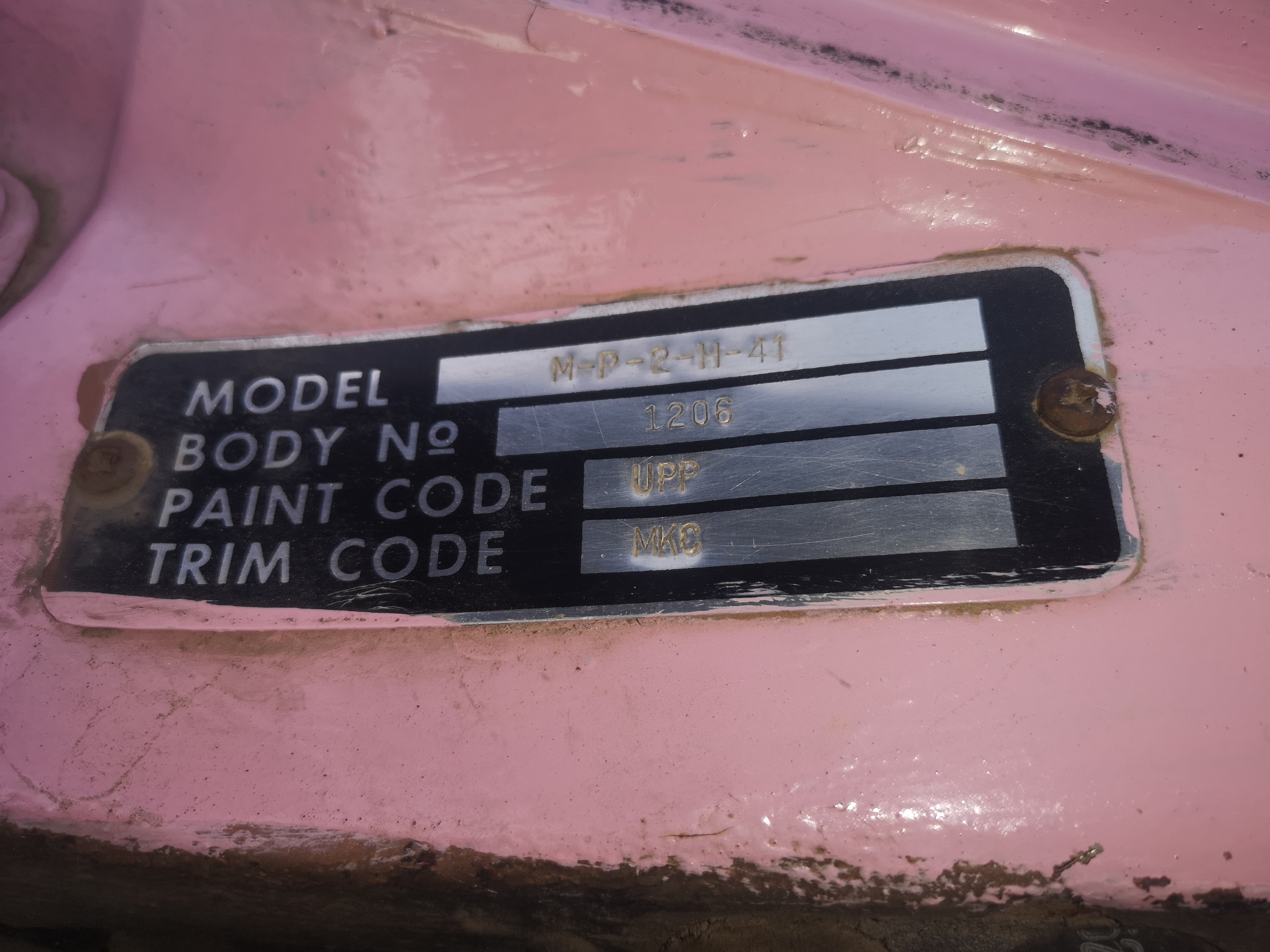
Plant No. 9) The next plant to be added was Evansville Assembly. Once it became clear a single plant was not sufficient to handle the growing demand for entry-level Plymouths, Chrysler purchased another assembly plant from the Graham-Paige car company, one of several automakers that were unable to weather the depression. This factory was located in Evansville, Ind. Status: Out of service
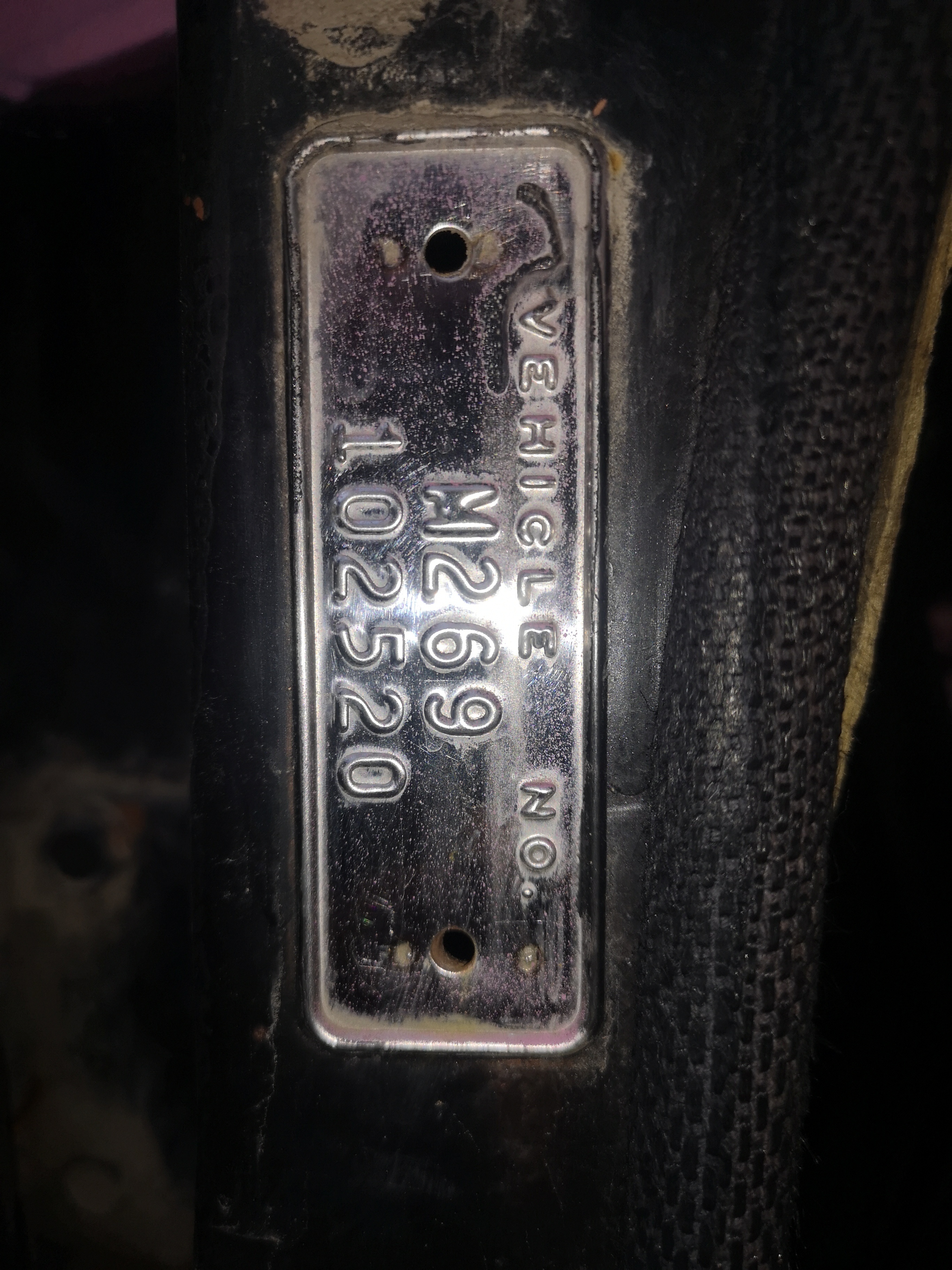
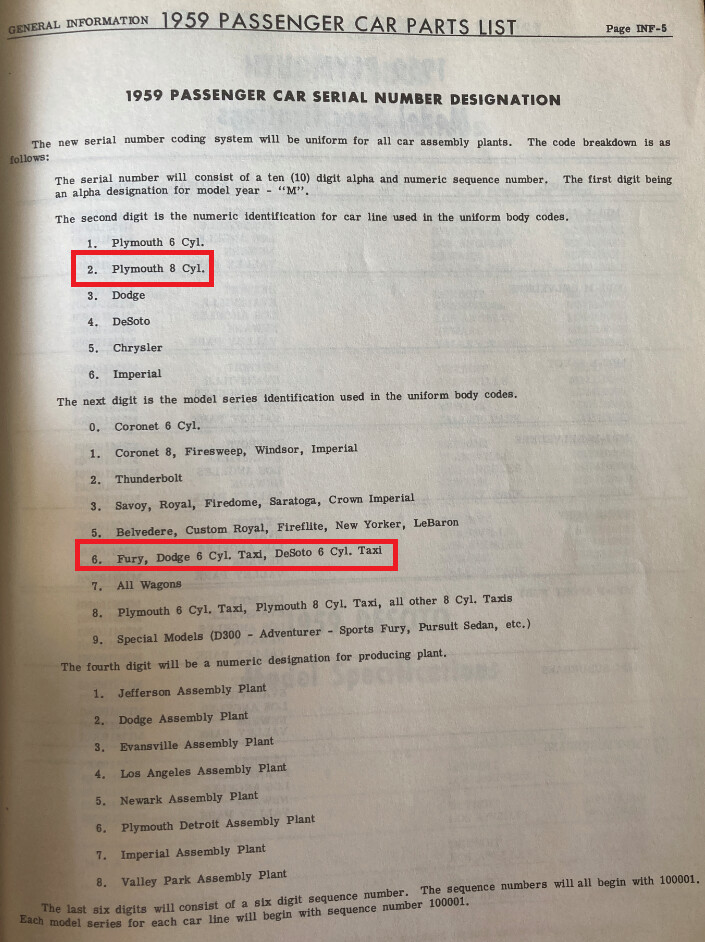
Hard info to find on plant number 9! That would make this car a US car and not Canadian.
Also Dan, I get that it’s a 313, bored to…blah blah
But when looking online for parts, they don’t give options for 313, only 318.
Also, this little bit of info from allpar forums.
In 1951 Chrysler of Canada began importing V-8 engines for the Canadian-built Chrysler Saratoga. The DeSoto FireDome V8 engine was imported starting in 1952 and the Dodge V8 in 1953. When Plymouth came out with its V8 for 1955, that engine was imported for the Plymouth Belvedere and Dodge Mayfair. The lower-priced Plaza, Savoy, Crusader and Regent all remained 6-cylinder only. Thus the V-8 engines offered in Canada from 1951 to 1955 were identical to the American firm, as the engines were built in Detroit.
During 1955 Chrysler of Canada underwent an expansion program, building a new V-8 engine plant, expanding the Windsor assembly plant and building a string of parts depots across the country as the firm ended the old area distributor network and had dealers connect directly to Chrysler.
For the 1956 model year, Chrysler of Canada began building V-8 engines for the Canadian market. The Plymouth and Dodge used, first, the 270-cid V8 then switched to the 277-cid V-8. The 303-cid V8 shared much with the 277-cid V8, including the heads, and had a 3.81" bore and 3.31" stroke, compared to the 277-cid’s 3.625"x3.25". It was used in Canadian-built Dodge Custom Royal and Chrysler Windsor models. Also, the engine was exported to Detroit for use in the Plymouth Fury, and no, it was not available in Canadian-built Plymouths or 115"-wheelbase Dodges in 1956.
And here lies Chrysler Canada’s problem - that larger Dodge. The American Ford company built Ford, Mercury and Lincoln. The Ford went against Chevrolet and Plymouth, the Mercury against Oldsmobile and DeSoto, and the Lincoln against Cadillac and Imperial. General Motors also had the Pontiac and Buick, with Pontiac going against the Dodge and Buick against Chrysler.
The larger Dodge was not a big seller, with 2,650 produced for 1954 model year, 3,650 in 1955, 7,000 in 1956, 7,048 in 1957, and 4,345 in 1958. If Chrysler had imported the Custom Royal, the 303 and 313 may very well have not come about. Instead, Chrysler Canada could have followed the American Plymouth engine development.
The 313-cid V8 was derived by boring out the 303-cid V8. Both had a 3.31" stroke, but the 313 had a 3.875" bore compared to the 3.81" of the 303. The 313 was introduced in 1957 for the Dodge Custom Royal, while the smaller Dodges and Plymouths got the 303. For 1958, the 313 V8 moved down to the small Dodges and Plymouths while the Canadian-built Dodge Custom Royal went to the 325-cid V8.
In the same years in the U.S., Plymouth used the 277-cid V8 in 1956 and again in 1957 for the Plaza. By enlarging the bore from 3.75" to 3.91", Plymouth got the 301-cid V8, used in all but the Fury in 1957. The Fury used the 318-cid which was the 301 stroked to 3.31". In 1958, the 318-cid V8 was used by all Plymouth V8 models, with a 350-cid (“B” block) optional.
To save money, Chrysler of Canada kept the 313 instead of boring the block out to 3.91" for 318-cid. The extra 5-cid just was not worth the expenditure, I suppose. Both engines had an advertised 225 horsepower. Chrysler was also facing a shrinking market at this time. In 1955 calendar year Chrysler of Canada produced 97,444 cars, which fell to 91,119 in 1956, 69,421 in 1957, 44,131 in 1958 and 42,618 in 1959. The “Forward Look” of 1957 may have sold like hotcakes in the States, but in Canada it bombed.
Remember, Chrysler of Canada built its own “A” series engines, from blocks to cranks to pistons to heads to camshafts. This was the result of the new V-8 plant opening in late 1955. The switch to the 318-cid for 1965 was made in anticipation of the Canada-US auto trade agreement. Also, Chrysler of Canada did not begin production of the new thin-wall, wedge-head “LA” engine until 1968 model year, one year after the U.S. parent did. Something to watch out for when restoring a 1967 Plymouth Fury or Dodge Polara/Monaco model. Chrysler of Canada continued to build the slant-six and the 318-cid V-8 into the very early 1980s. The engine plant was closed, along with the old Maxwell-Chalmers plant on Tecumseh Avenue, as cost-cutting measures to save the company from bankruptcy.
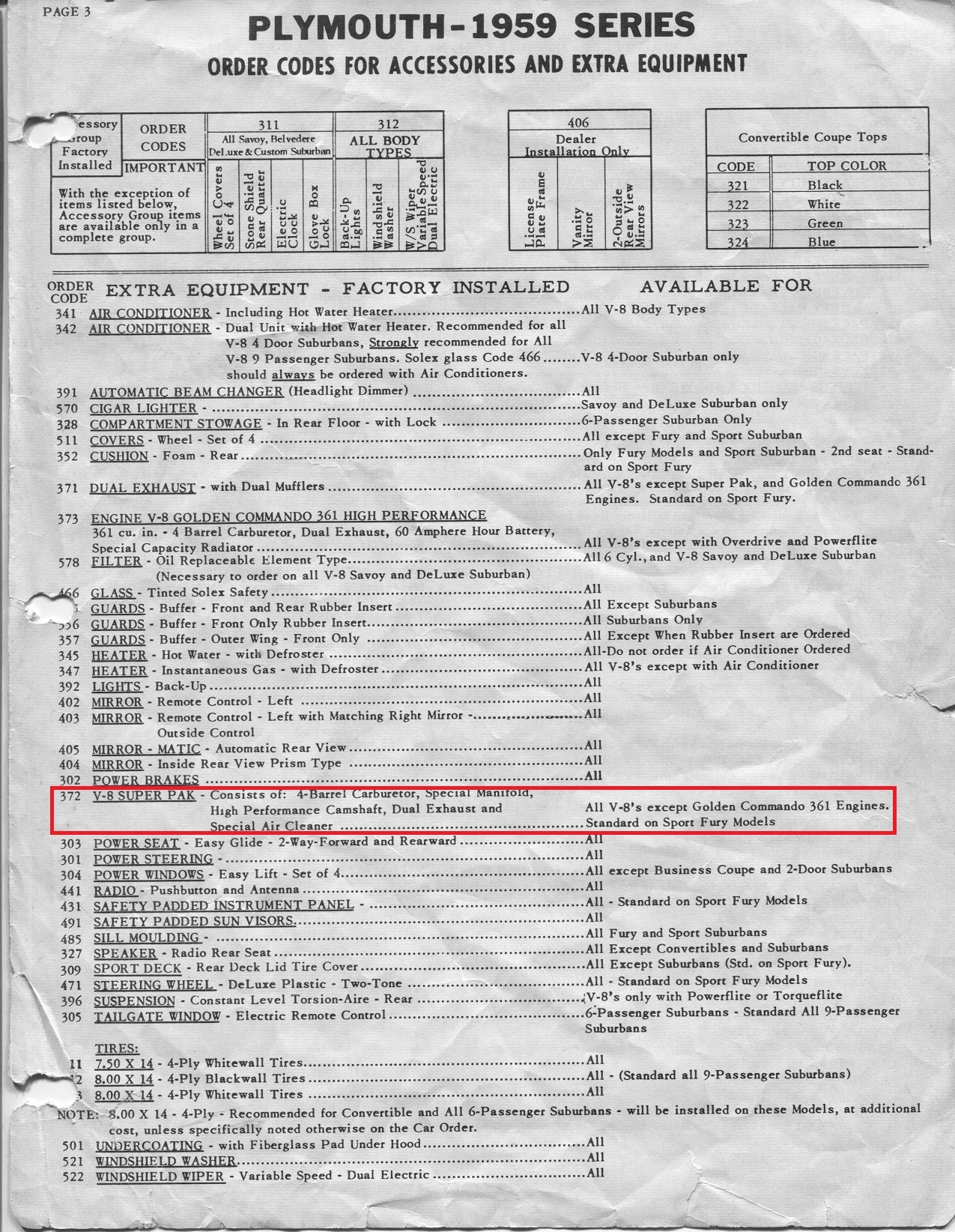
So, if our car is in fact built in Indiana, then it’s got a 318?!?


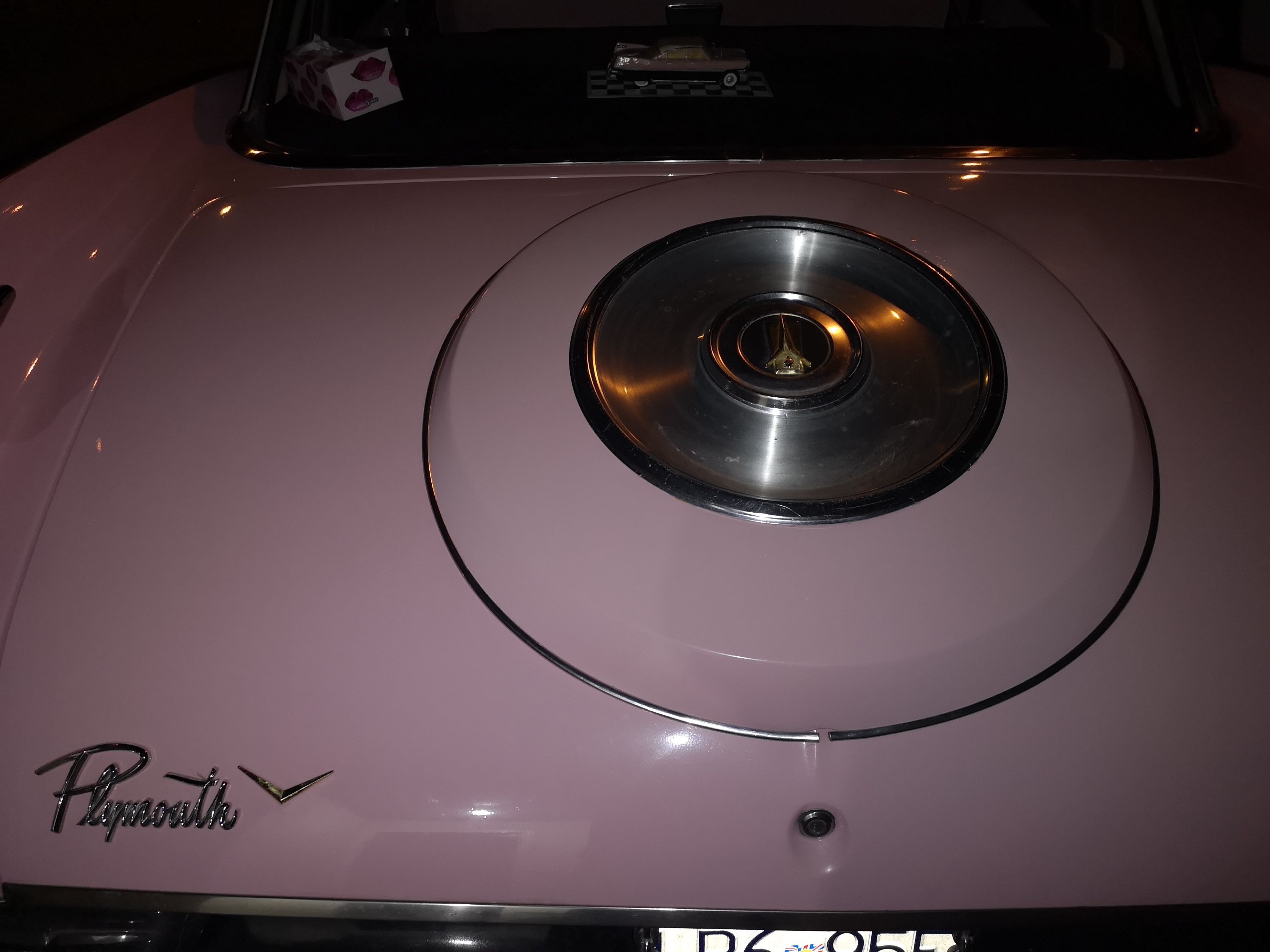
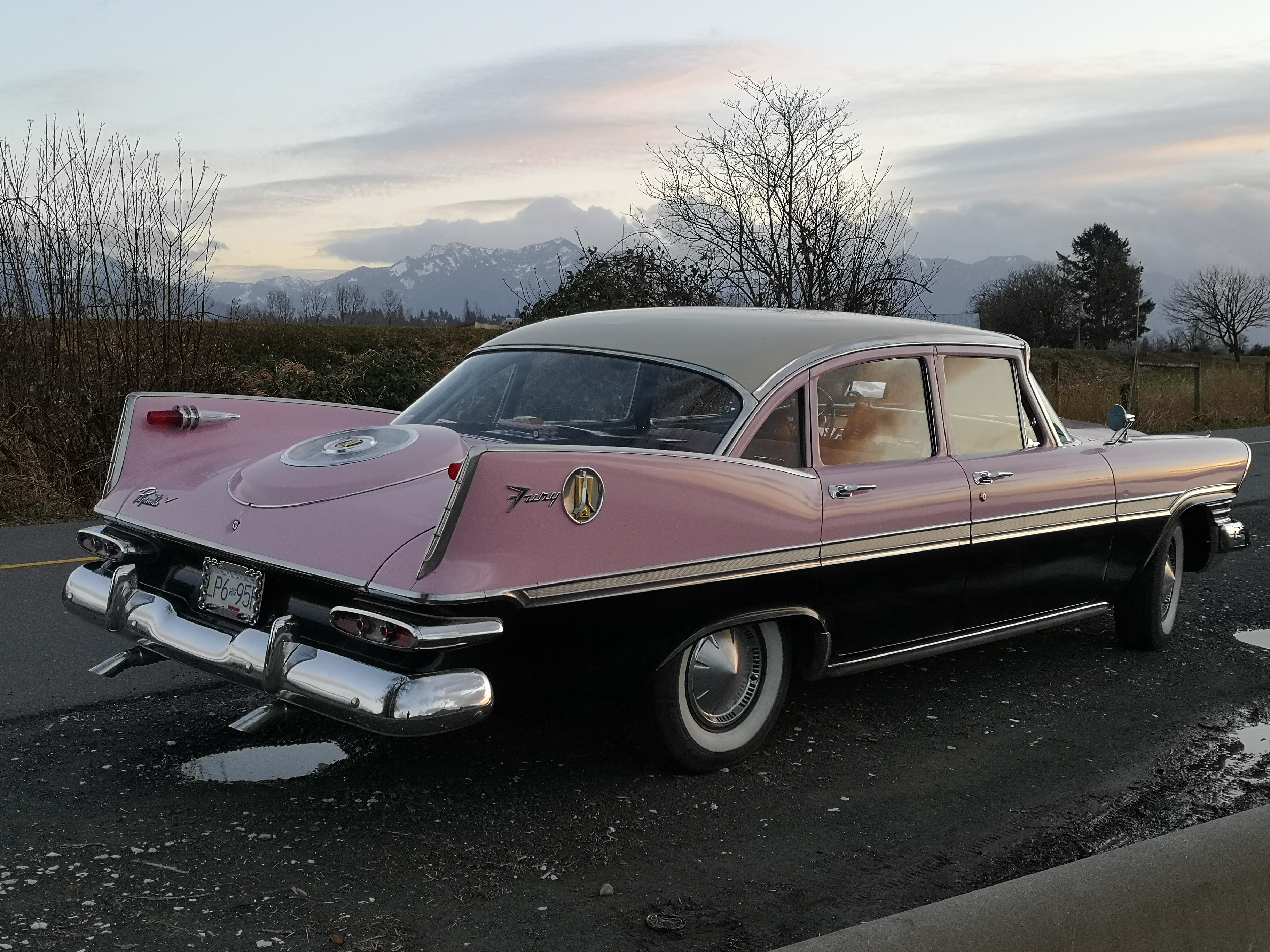
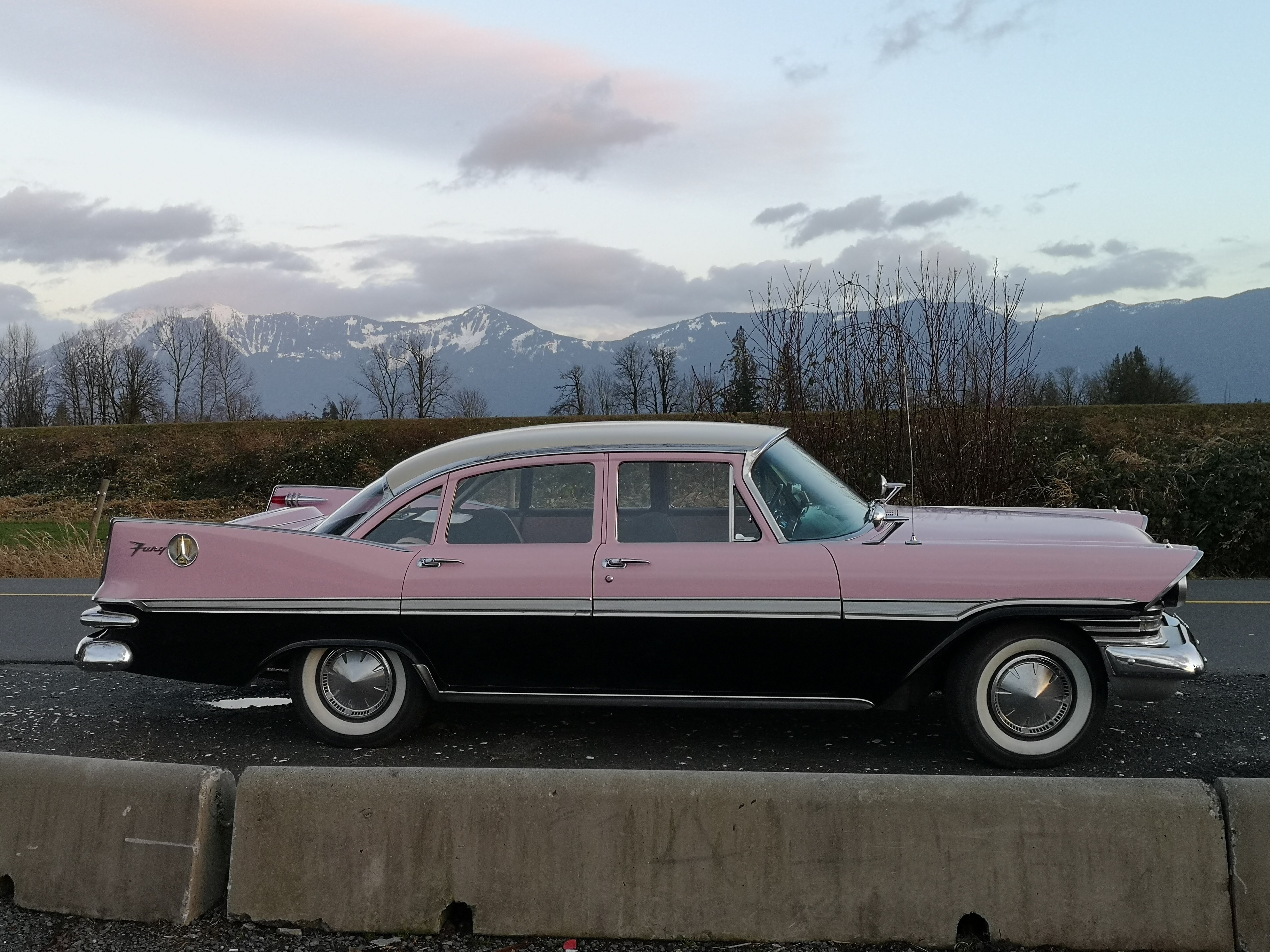


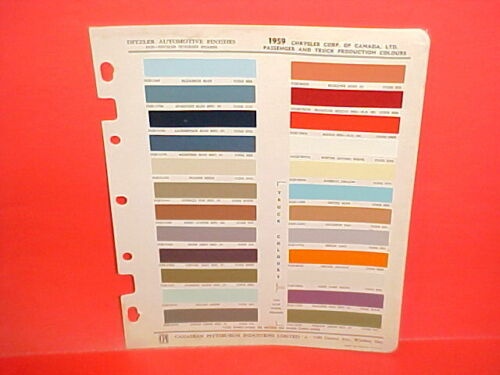
 In fact, as far as I know, there weren’t any three-tone Plymouths available… The other customizations to Loretta are the “Tiffany medallions” and the fin lights. I suppose that puts the car in the modified collector category.